Use condition, hardware, access, and your keep list to choose a workable removal method.
Start with the outcome
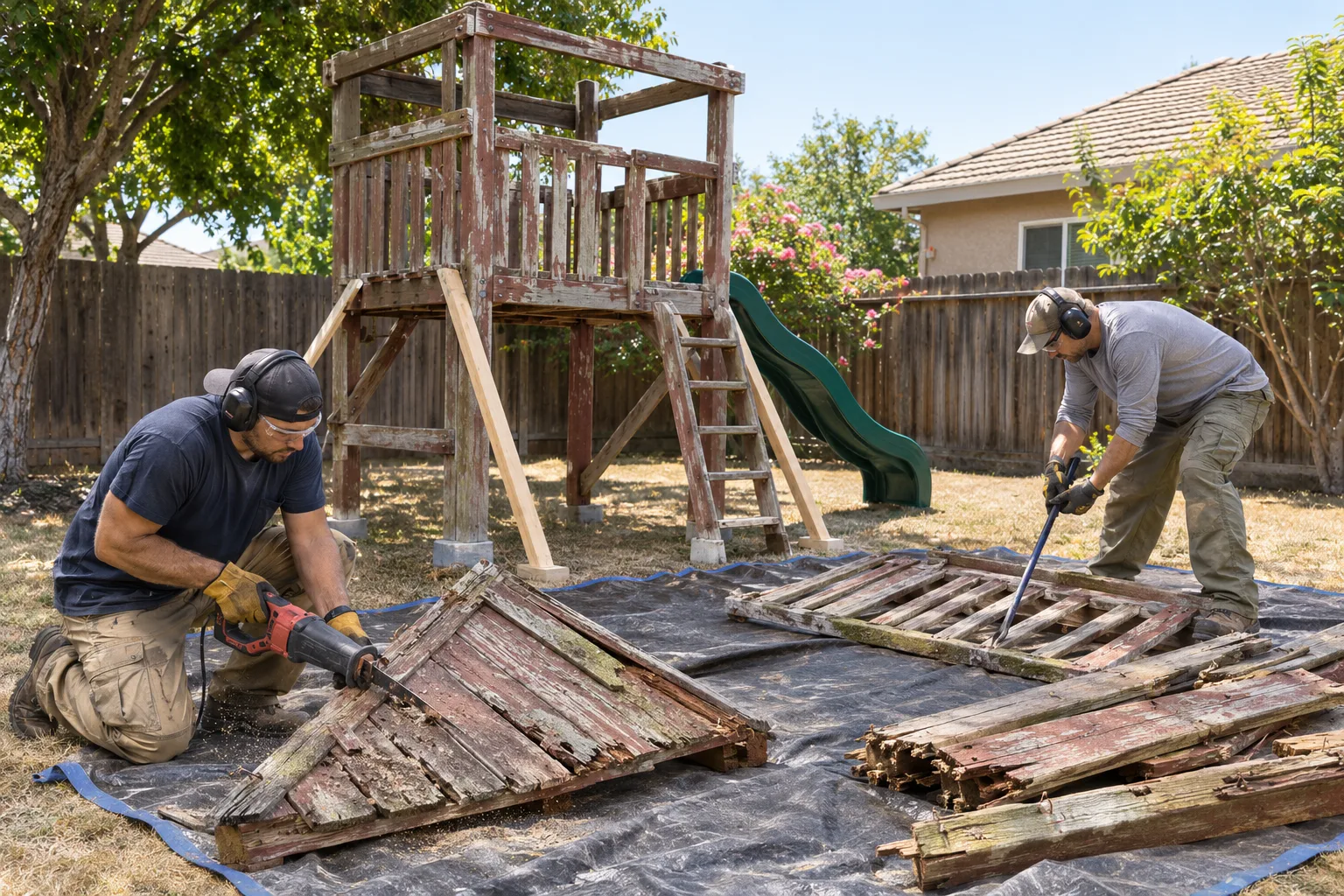
Dismantling makes sense when sound sections or accessories need to stay intact. Controlled demolition fits structures with rot, split lumber, seized fasteners, or no reuse plan. The decision belongs to the actual structure, not its age alone.
Check the four deciding conditions
Inspect structural soundness, the condition of fasteners, the narrowest part of the route, and what must be preserved. A sound tower with reachable bolts may separate cleanly. A leaning frame with hidden rot needs a different plan.
Use a keep list
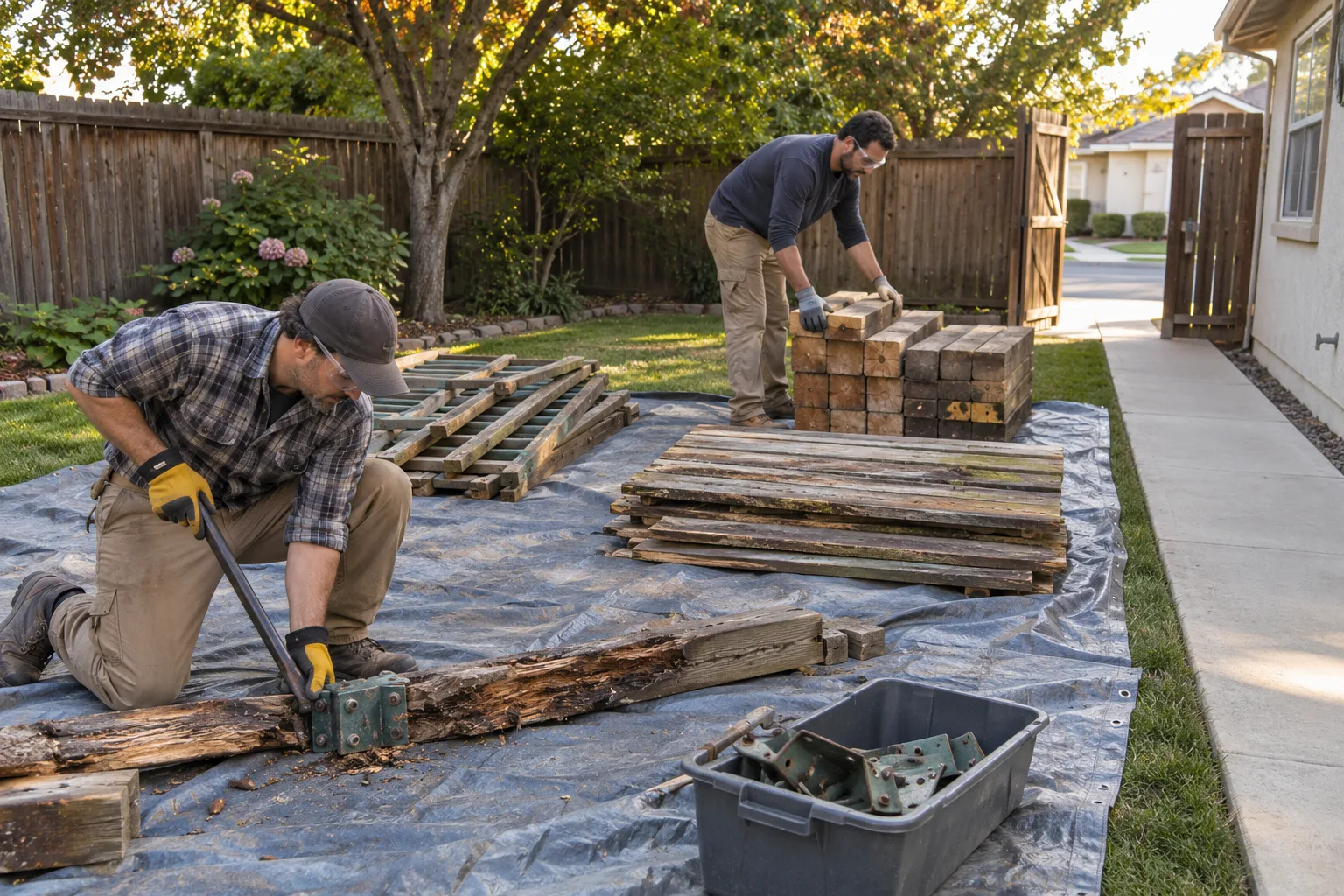
Write down every slide, swing, roof panel, ladder, bracket, or hardware group that should remain. Anything not on the list can be prepared for removal. A keep list prevents a reusable part from entering the debris pile by mistake.
Avoid unsafe DIY assumptions
Do not climb or work under an unstable structure. Unknown electrical lines, concrete, buried utilities, severe decay, and heavy overhead sections need assessment before cutting or releasing connections.
Checklist
- Photograph all four sides and every post base
- Mark parts that must survive
- Show rot, cracks, leaning, and corrosion
- Measure the gate and the longest intact section
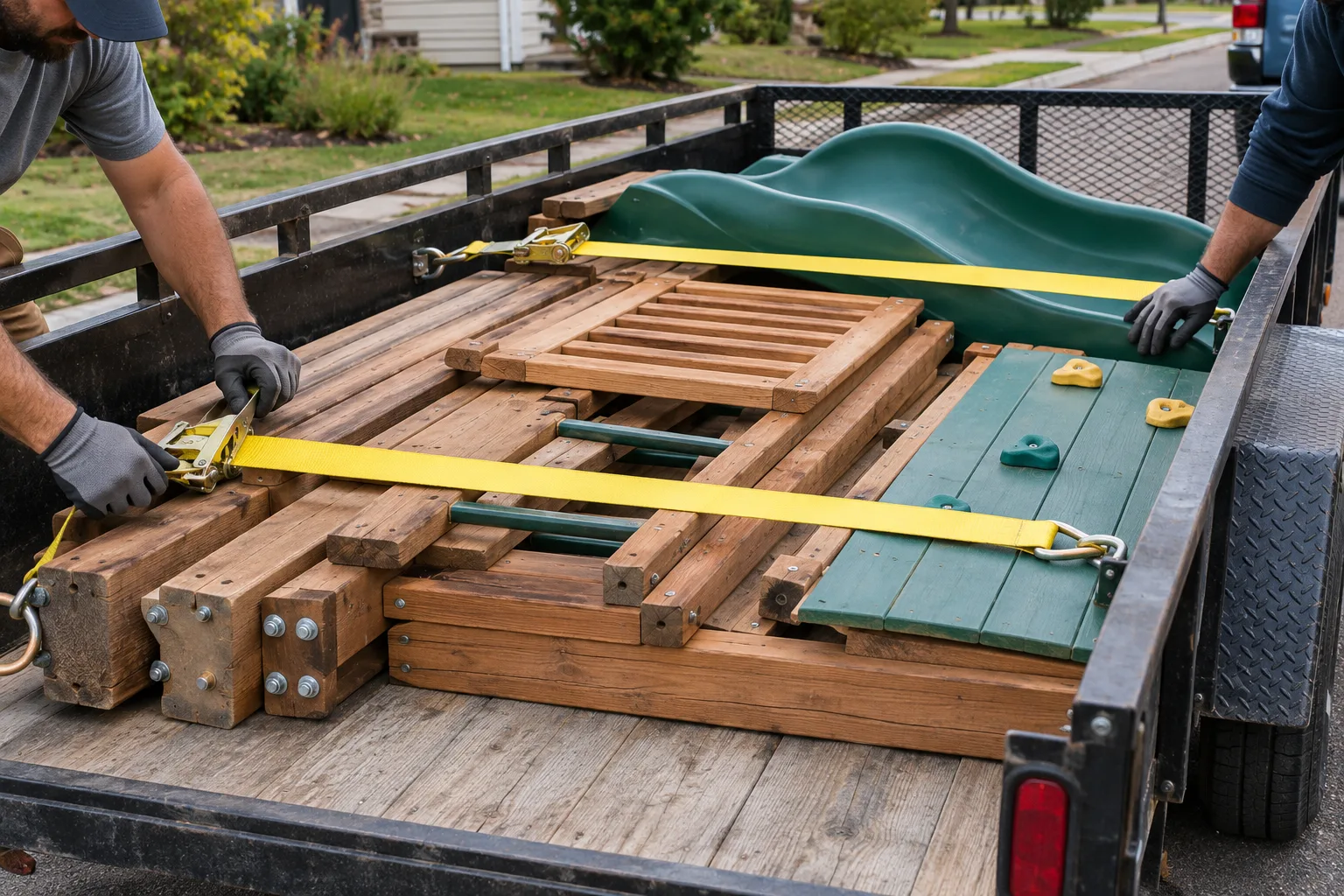
- Confirm who will store or transport kept parts
Use the facts in the estimate
Send a short item list, the measurements that limit the route, and photographs in route order. Confirm accepted material, anchors, retained parts, cleanup boundary, timing, and final terms directly. A photo review supports planning; it does not confirm an appointment.
Next, review playset demolition, compare the dismantling and demolition decision, or prepare an estimate call.